What Is the Best Liquid to Clean a Microwave?
Your microwave works hard every single day. From reheating leftovers to defrosting frozen meals, it is one of the most used appliances in any kitchen. But all that use comes with a price. Splattered sauces, grease buildup, food residue, and lingering odors can turn the inside of your microwave into a genuine mess if it is not cleaned regularly.
The question most people ask is simple: what is the best liquid to clean a microwave? The answer depends on how dirty your microwave is, what you have available at home, and whether you prefer natural solutions or commercial cleaners. This guide covers everything you need to know, from the science behind why microwaves get dirty to the most effective liquids for getting them spotless again.
Why Microwaves Get So Dirty So Fast
Before we talk about solutions, it helps to understand the problem. Microwaves heat food by using electromagnetic radiation to excite water molecules inside the food, causing them to vibrate and generate heat. This process is incredibly efficient, but it also means that any moisture inside the food can turn into steam rapidly.
When food heats unevenly or is not covered, that steam and moisture carry food particles outward. They hit the walls, ceiling, and floor of the microwave cavity and stick. Over time, those particles bake onto the surface with each subsequent use, making them harder and harder to remove.
According to Wikipedia's overview of microwave ovens, the interior cavity of a microwave is typically made of metal, which reflects microwaves but can accumulate grease and food residue just like any other kitchen surface. That buildup is not just unsightly. It can affect the efficiency of your appliance and even create unpleasant odors that transfer to your food.
The Best Liquids to Clean a Microwave
There is no single "best" liquid for every situation. The right choice depends on the level of grime, your sensitivity to chemicals, and what you already have in your kitchen. Here are the top options, ranked by effectiveness and practicality.
1. White Vinegar and Water (The Gold Standard)
If there is one cleaning solution that professionals and homeowners agree on, it is white vinegar diluted with water. This combination is safe, affordable, non-toxic, and remarkably effective at loosening baked-on food and neutralizing odors.
How to use it:
Mix equal parts white vinegar and water in a microwave-safe bowl. Place a wooden toothpick or chopstick in the bowl to prevent superheating. Microwave on high for 5 minutes. Let the bowl sit inside the closed microwave for another 3 to 5 minutes without opening the door. The steam will saturate the interior and loosen all the grime. Then simply wipe everything down with a damp cloth or sponge.
The acetic acid in white vinegar is what does the heavy lifting. According to Healthline's breakdown of vinegar's cleaning properties, acetic acid is effective at dissolving mineral deposits, grease, and certain types of bacteria, making it one of the most versatile natural cleaning agents available.
The steam method works because heat and moisture together soften hardened food particles, making them easy to wipe away without scrubbing. It is gentle on the microwave's interior surfaces and leaves no harmful residue behind.
Best for: Regular maintenance cleaning, mild to moderate buildup, odor removal.
2. Lemon Juice and Water
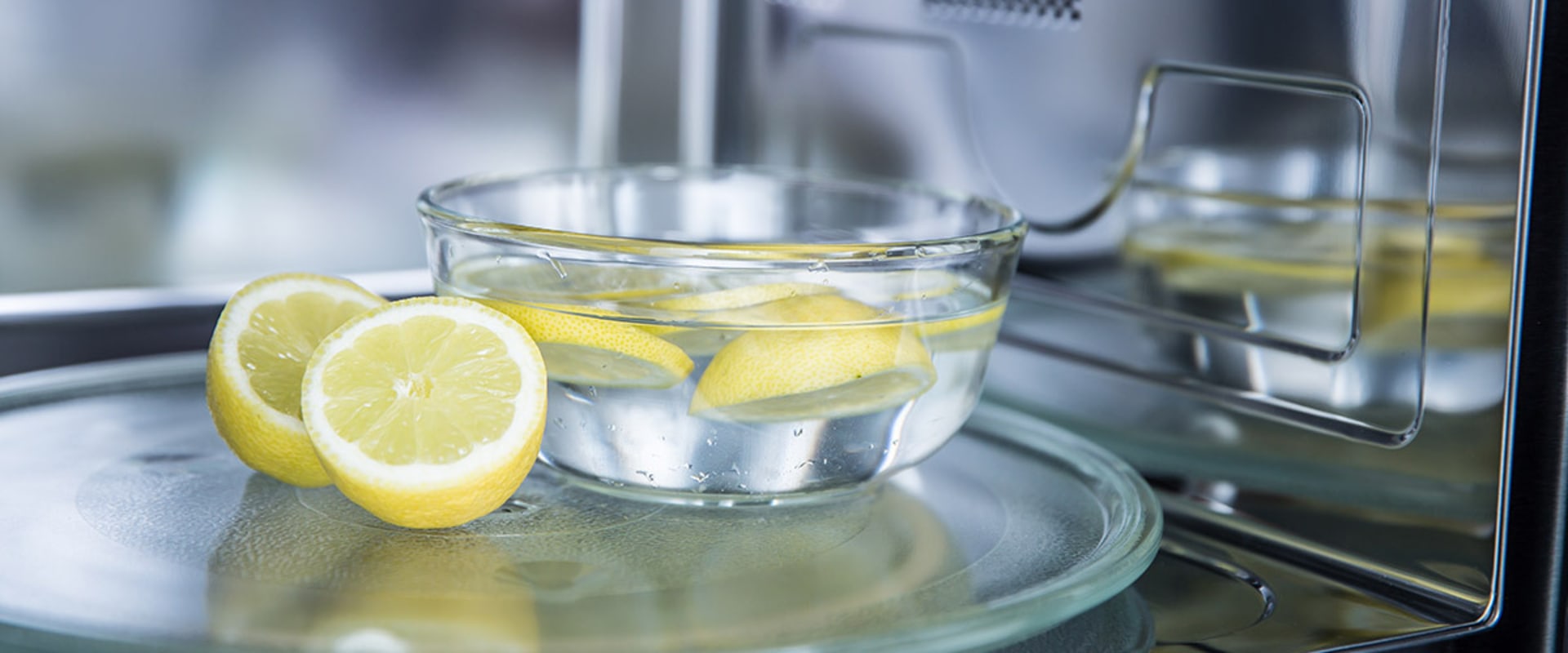
Lemon juice is another natural powerhouse when it comes to microwave cleaning. It works on a similar principle to vinegar, using citric acid to break down grease and food residue. The added bonus is that it leaves your microwave smelling fresh and clean rather than like vinegar.
How to use it:
Squeeze the juice of one or two lemons into a microwave-safe bowl of water. Drop the squeezed lemon halves into the bowl as well. Microwave on high for 3 to 5 minutes, then let it sit for a few minutes before wiping down the interior.
Citric acid is a naturally occurring compound found in citrus fruits and is widely recognized as an effective cleaning and degreasing agent. The National Center for Biotechnology Information (NCBI) has published research confirming the antimicrobial properties of citric acid, which means lemon juice does not just clean your microwave visually. It also helps reduce bacterial contamination on interior surfaces.
Best for: Light to moderate cleaning, odor elimination, households that prefer a fresh citrus scent.
3. Dish Soap and Water
Sometimes the simplest solution is the most effective one. A few drops of dish soap mixed into a bowl of warm water creates a gentle but effective cleaning liquid that works well for regular microwave maintenance.
How to use it:
Add a few drops of dish soap to a microwave-safe bowl of warm water. You can either microwave this mixture for 2 to 3 minutes to create steam, or simply use the soapy water directly with a sponge or cloth to wipe down the interior surfaces.
Dish soap is formulated to cut through grease, which is exactly what you need when dealing with the oily residue that builds up inside a microwave. It is safe for all interior surfaces and rinses away cleanly without leaving a residue.
The key is to avoid using too much soap, as excessive suds can be difficult to rinse away and may leave a film on the interior walls. A small amount goes a long way.
Best for: Weekly maintenance cleaning, light grease and food splatter, households with children who need a gentle, non-toxic option.
4. Baking Soda and Water
Baking soda is one of the most well-known natural cleaning agents in existence. When mixed with water to form a paste or a solution, it acts as a mild abrasive that can scrub away stubborn stains without scratching the interior surfaces of your microwave.
How to use it:
Mix two tablespoons of baking soda with one cup of warm water. Stir until dissolved. Use a sponge or cloth soaked in this solution to scrub the interior of the microwave, paying special attention to stained or heavily soiled areas. For tougher spots, apply a small amount of baking soda paste directly to the stain and let it sit for a few minutes before scrubbing.
According to the American Cleaning Institute, baking soda is a safe and effective cleaning agent for kitchen appliances because it is non-toxic, odor-neutralizing, and gentle enough to use on most surfaces without causing damage.
Baking soda is particularly useful when combined with vinegar for a two-step cleaning process. Use the vinegar steam method first to loosen grime, then follow up with a baking soda scrub for any remaining stubborn spots.
Best for: Stubborn stains, heavy buildup, deodorizing, and as a follow-up to the vinegar steam method.
5. Hydrogen Peroxide
Hydrogen peroxide is a step up in cleaning power and is particularly useful when you are dealing with a microwave that has not been cleaned in a long time. It is a natural disinfectant that kills bacteria and viruses on contact, making it an excellent choice for households that want to go beyond just removing visible grime.
How to use it:
Use a 3% hydrogen peroxide solution, which is the standard concentration available at most pharmacies and grocery stores. Apply it directly to the interior surfaces of the microwave using a spray bottle or a cloth. Let it sit for 5 to 10 minutes, then wipe clean with a damp cloth.
Do not microwave hydrogen peroxide directly, as it can decompose rapidly when heated. Instead, apply it after using the steam method to loosen grime, then use it as a final disinfecting wipe-down.
The Centers for Disease Control and Prevention (CDC) recognizes hydrogen peroxide as an effective surface disinfectant, confirming its ability to eliminate a broad spectrum of pathogens including bacteria, viruses, and fungi.
Best for: Deep disinfecting, households with immunocompromised members, post-illness cleaning, or microwaves that have gone a long time without cleaning.
6. Commercial Microwave Cleaners
While natural solutions work well for most situations, there are commercial cleaning products specifically formulated for microwave interiors. These products typically contain surfactants and degreasers that are more powerful than household alternatives.
When choosing a commercial cleaner, look for products that are labeled as food-safe and free from harsh chemicals like bleach or ammonia, which can leave residues that are unsafe to ingest and can damage the interior coating of your microwave.
Always follow the manufacturer's instructions and ensure the microwave is thoroughly rinsed and aired out before using it to heat food again.
Best for: Extremely heavy buildup, commercial kitchens, or situations where natural methods have not been fully effective.
What to Avoid When Cleaning a Microwave
Knowing what not to use is just as important as knowing what works. Here are the liquids and products you should keep away from your microwave:
Bleach. Bleach is too harsh for microwave interiors. It can damage the coating on the walls and leave chemical residues that are dangerous when the microwave is used to heat food.
Undiluted vinegar. While diluted vinegar is excellent, using it at full strength can be too acidic for prolonged contact with certain interior surfaces and may leave a strong odor.
Ammonia-based cleaners. Products like some glass cleaners contain ammonia, which is not safe for use inside a food-contact appliance.
Abrasive scrubbers. Steel wool and harsh scrubbing pads can scratch the interior walls of your microwave, creating grooves where bacteria and food particles can accumulate.
Excessive water. Getting too much water into the vents or electrical components of your microwave can cause damage. Always use a damp cloth rather than soaking the interior.
How Often Should You Clean Your Microwave?
The frequency of cleaning depends on how often you use your microwave and whether you cover your food while heating it. As a general guideline:
After every use: Wipe down the interior with a damp cloth if there are any visible splatters. This takes less than a minute and prevents buildup from hardening.
Weekly: Do a full steam clean using the vinegar or lemon juice method. This keeps odors at bay and prevents grime from accumulating.
Monthly: Remove the turntable plate and wash it separately in the sink with dish soap. Wipe down the exterior, including the door, handle, and control panel.
Every few months: Do a thorough deep clean using a combination of methods, including a baking soda scrub and a hydrogen peroxide disinfecting wipe-down.
Consistent cleaning not only keeps your microwave hygienic but also extends its lifespan. A microwave that is regularly maintained runs more efficiently and is less likely to develop odors or performance issues over time.
When DIY Cleaning Is Not Enough
There are times when a microwave, and the kitchen around it, needs more than a quick wipe-down. If your kitchen has accumulated grease and grime across multiple surfaces, if you are moving into a new home, or if you simply do not have the time to keep up with regular cleaning, a professional cleaning service is the most practical solution.
Professional cleaners have access to commercial-grade products and equipment that go far beyond what most households have available. They also bring the expertise to clean efficiently and thoroughly, covering areas that are easy to overlook during a routine home clean.
If you are looking for a reliable team to handle your home cleaning needs, Elite Maids House Cleaning's professional cleaning services offer a comprehensive range of options designed to keep your entire home in top condition. From kitchens to bathrooms to living spaces, their trained professionals handle it all with care and attention to detail.
Understanding the Different Types of Cleaning
Not all cleaning is the same. There is a significant difference between a quick surface wipe-down, a standard cleaning, and a full deep clean. Understanding these distinctions helps you make better decisions about how to maintain your home.
A standard cleaning covers the visible surfaces and high-traffic areas of your home on a regular basis. A deep clean goes further, targeting areas that are not part of a routine clean, such as inside appliances, behind furniture, and along baseboards.
Elite Maids House Cleaning outlines their approach clearly on their cleaning process page, giving homeowners a transparent look at exactly what is included in each type of service. Whether you need a one-time reset or ongoing maintenance, understanding the process helps you choose the right level of service for your home.
Professional House Cleaning in Salt Lake City, UT
If you are based in Salt Lake City, Utah, and are looking for a trusted local cleaning service in Salt Lake City, Elite Maids House Cleaning serves the area with the same high standards they bring to every location. Salt Lake City homeowners can find their local team by searching for a house cleaning service in Salt Lake City, where verified reviews from real customers speak to the quality and reliability of their service.
Whether you need help with a one-time deep clean, regular weekly or biweekly maintenance, or a move-in or move-out clean, their Salt Lake City team is equipped to handle it all professionally and efficiently.
Final Thoughts
The best liquid to clean a microwave is not a single product. It depends on what you are dealing with. For everyday maintenance and odor control, white vinegar and water is the most effective and practical choice. For a fresh scent with similar cleaning power, lemon juice and water is an excellent alternative. For stubborn stains, baking soda paste gets the job done. And for deep disinfecting, hydrogen peroxide is hard to beat.
The most important thing is consistency. A microwave that gets a quick wipe-down after each use and a proper steam clean once a week will never reach the point of being a major cleaning project. Small, regular habits are always easier than one big overwhelming task.
And when the cleaning goes beyond just the microwave, remember that professional help is always available. A clean home is not a luxury. It is a foundation for a healthier, more comfortable life.